Sentinel Lymph Node Biopsy
A sentinel lymph node biopsy (SLNB) is a surgical procedure used to determine whether cancer has spread from a primary tumor to the lymph nodes. It is most commonly used in the treatment and staging of cancers such as breast cancer and melanoma. Here's an overview of the procedure:
Purpose
Staging Cancer:
- To determine the extent of cancer spread by examining the first lymph node(s) that drains lymph from the tumor site, known as the sentinel lymph node(s).
Guiding Treatment:
- Helps decide whether additional treatment, such as chemotherapy or radiation, is needed based on the presence or absence of cancer in the sentinel lymph node.
Procedure
Preoperative Preparation:
- Imaging Studies: May include preoperative imaging such as a lymphoscintigraphy to map the lymphatic drainage.
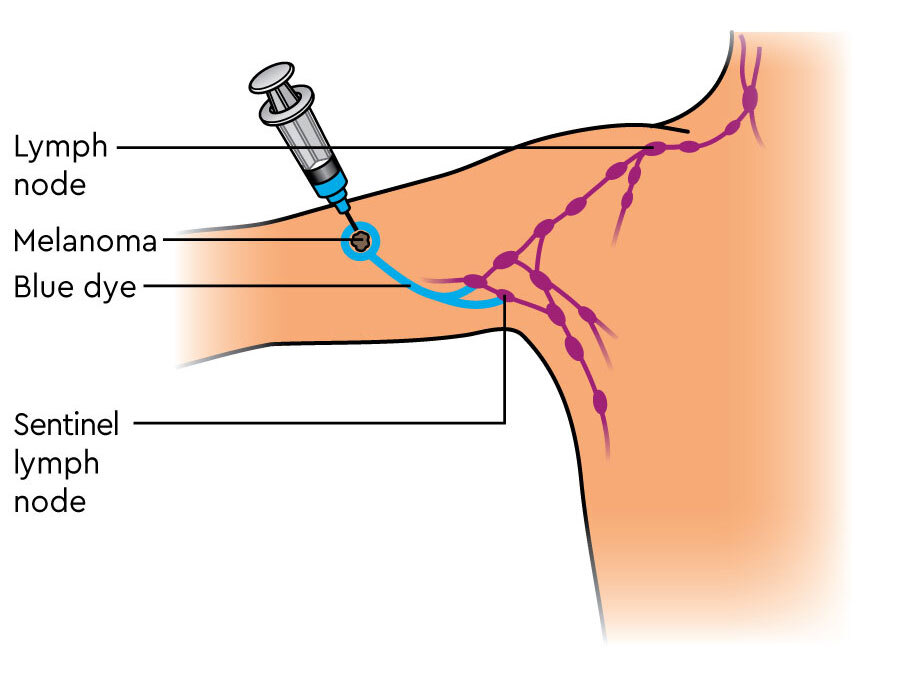
- Injection of Tracer: A radioactive substance or blue dye is injected near the tumor site to identify the sentinel lymph node(s). This can be done either before surgery or during the procedure.
Surgical Procedure:
- Anesthesia: The procedure is typically performed under local anesthesia with sedation or general anesthesia.
- Identification of Sentinel Node: Using a handheld gamma probe or visual inspection (for blue dye), the surgeon locates the sentinel lymph node(s).
- Removal of Sentinel Node(s): One or more sentinel lymph nodes are surgically removed for examination.
- Pathological Examination: The removed nodes are sent to a laboratory for microscopic analysis to check for cancer cells.
Postoperative Care:
- Recovery: Patients may experience mild pain or swelling at the injection or biopsy site. Recovery time is generally short, and most patients can resume normal activities within a few days.
- Wound Care: Follow specific instructions for wound care and monitoring for signs of infection or complications.
Benefits
Minimally Invasive:
- SLNB is less invasive compared to traditional lymph node dissection, which involves removing multiple lymph nodes.
Accurate Staging:
- Provides precise information about cancer spread, which helps in tailoring treatment plans and avoiding unnecessary removal of additional lymph nodes.
Reduced Risk of Side Effects:
- Reduces the risk of complications such as lymphedema (swelling due to lymph fluid buildup) and decreased range of motion compared to more extensive lymph node surgery.
Limitations and Risks
False Negative Results:
- There is a small risk that the sentinel lymph node may not contain detectable cancer even if it has spread. Additional nodes might be affected.
Procedure Risks:
- Potential risks include infection, bleeding, and allergic reactions to the tracer used.
Not Suitable for All Patients:
- SLNB may not be appropriate for all types of cancers or for patients with advanced disease.
Follow-Up and Further Treatment
Additional Testing:
- If cancer is found in the sentinel lymph node(s), further testing may be required to assess additional lymph nodes or other areas of the body.
Treatment Decisions:
- Treatment plans may be adjusted based on SLNB results. This may include additional surgery, chemotherapy, radiation therapy, or other interventions.
Summary
A sentinel lymph node biopsy is a valuable tool in cancer management, providing essential information about the spread of cancer while minimizing surgical impact. It allows for more targeted treatment strategies and helps in reducing the side effects associated with more extensive lymph node removal.